The Financial Toxicity Nobody Preps You For
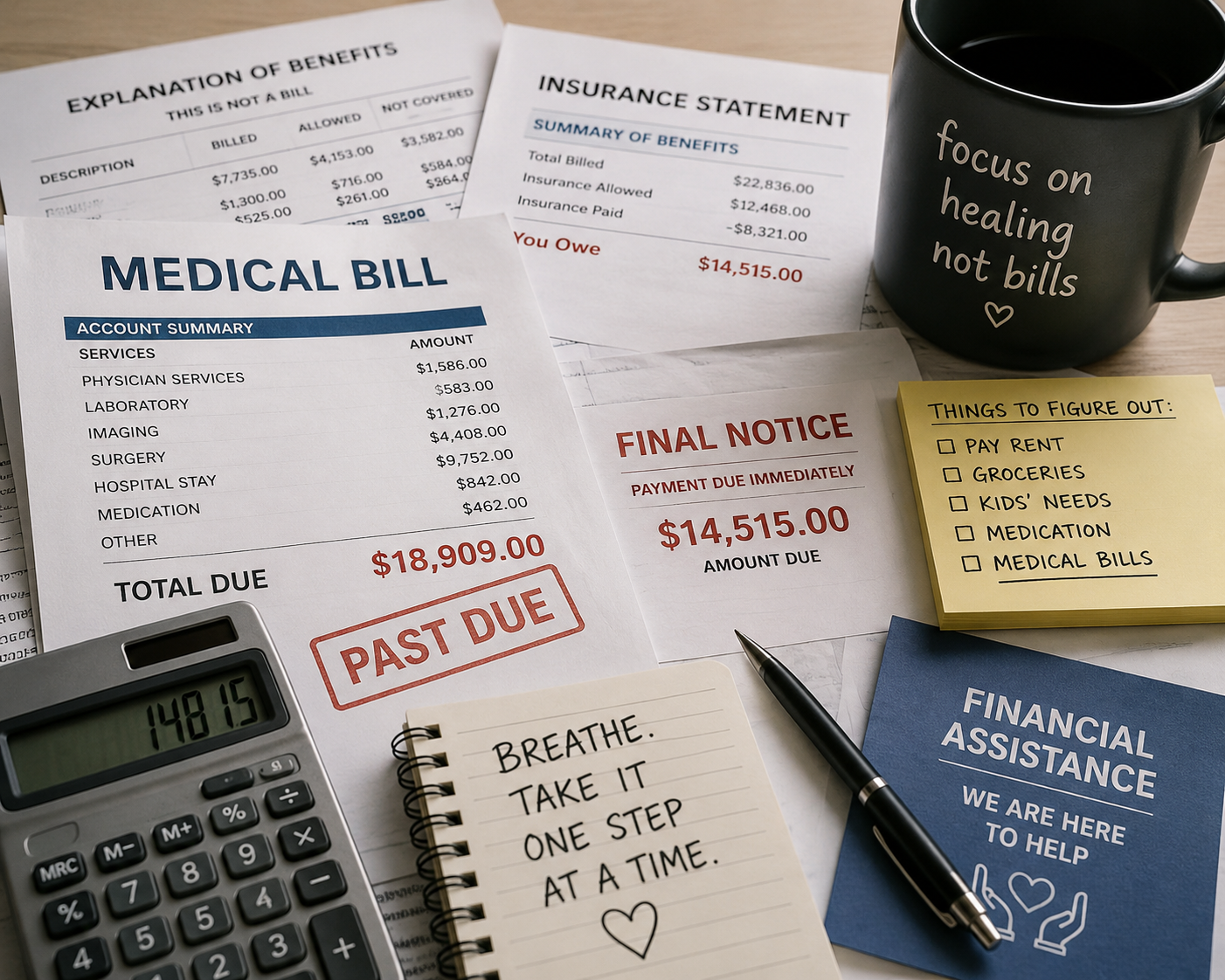
The first fear is the diagnosis. The second one shows up fast, sometimes in the same appointment. How am I going to pay for this?
Nobody warns you about that part. You are still trying to understand what stage means and your brain is already doing math. It feels shallow to think about money when your life is on the line. It is not shallow. It is survival, and you are right to worry about it.
There is a name for this. It is called financial toxicity, and it is as real as any side effect. It is the money stress that comes with cancer, and for a lot of us it hits as hard as the treatment itself. Studies have found that patients dealing with it skip doses, delay scans, and cut pills in half to stretch them. That means money problems do not just drain your bank account. They can change your care and your outcome.
Here is the thing that makes people feel alone in it. Financial toxicity does not care what your situation is. It finds you no matter where you start. And there is an incredibly damaging stigma that comes with it full of shame and embarrassment over not being able to afford their healthcare.
Maybe you do not have insurance at all, and you are staring down bills with no idea where to begin. Maybe you lost your job because you got too sick to work, and the insurance walked out the door with it. Maybe your job has no disability, no paid leave, and no cushion, so every missed shift is money you do not get back.
Or maybe you did everything right. You have a good job and solid insurance. And you still cannot touch that deductible before the bills pile up, so they roll to collections year after year while you keep paying what you can.
And then there is the spot so many people get stuck in. You make a little too much to qualify for most assistance, but nowhere near enough to actually cover treatment, medications, rent, and food. So you start ranking them. Which bill waits. Which pill you skip or stop taking. Which appointment you push out until you meet that deductible. Changing provider networks because one will no longer see you because your bill is 6 months past due, then having the new challenge of transferring all the correct records and history to the new provider network that doesn’t share the same type of patient portal. Or perhaps you have no health insurance because you are self-employed and pay everything cash but those tests and treatments far exceed what you bring in, and if you are self-employed and cannot work, no money comes in. No one should have to make these choices, and yet people make them every single day.
The costs also go way past the hospital bill. Nobody hands you the list of extras. Gas and parking for appointments that never seem to end. A hotel when treatment is hours from home. Childcare while you are in the infusion chair. Higher grocery costs when your body can only handle certain foods. Meal replacement drinks because you are too sick to eat but need something to keep your body going. Wigs, supplements, and supplies that insurance calls optional. Your caregiver losing wages to sit with you. Buying new clothing to work with ports, or because you lost too much weight, or gained the weight from steroids. It adds up quietly, and it adds up fast.
Medical debt is one of the top reasons people file for bankruptcy in this country. Let that sink in. This is not a you problem, it is a broken system, and you got handed the bill for it.
So let me say the part I wish someone had told me. Needing help is not a character flaw. The programs exist because this happens to good, hardworking people all the time. Asking for help is you doing your job as your own advocate, same as asking your doctor a hard question.
Help is truly out there, and more of it than most people realize. Your hospital or medical clinics have a financial counselor or social worker whose whole job is to help find resources for patients. Ask for them by name. Most hospitals also have a charity care or financial hardship program, and they are required to tell you about it if you ask. Drug companies run patient assistance programs that can lower or erase the cost of certain medications. There are copay foundations and disease-specific nonprofits that give real grants. Calling 211 can connect you to local help for rent, utilities, and food. Your community, your church, and even a well-run fundraiser can carry you further than you think.
A few small moves make a difference too. Ask for an itemized bill and check it for errors, because they happen more than you would guess. Ask about a payment plan before a bill goes to collections. Use the words “financial hardship” out loud with the billing office. Ask early, not after the letters start piling up.
Here is my honest promise. The right resource for you is out there. It depends on your situation, your income, your diagnosis, and even your zip code, but there is no single magic list that fits everyone. This is exactly why searching matters and why I am trying to build a list as close to the magic list as possible.
My resource database on my website is built to make that search easier. You can go to cancersupportstudio.com/resources and simply search for financial help, and a lot more. If you do not find your exact fit there, do not stop. Keep looking, call the numbers, ask the questions. The help is real, and it is worth the effort to track down the one that fits you.
You are already carrying enough. You should not have to carry this part alone too. Start your search at cancersupportstudio.com/resources, and if you get stuck, reach out to me. I will try to find you help.