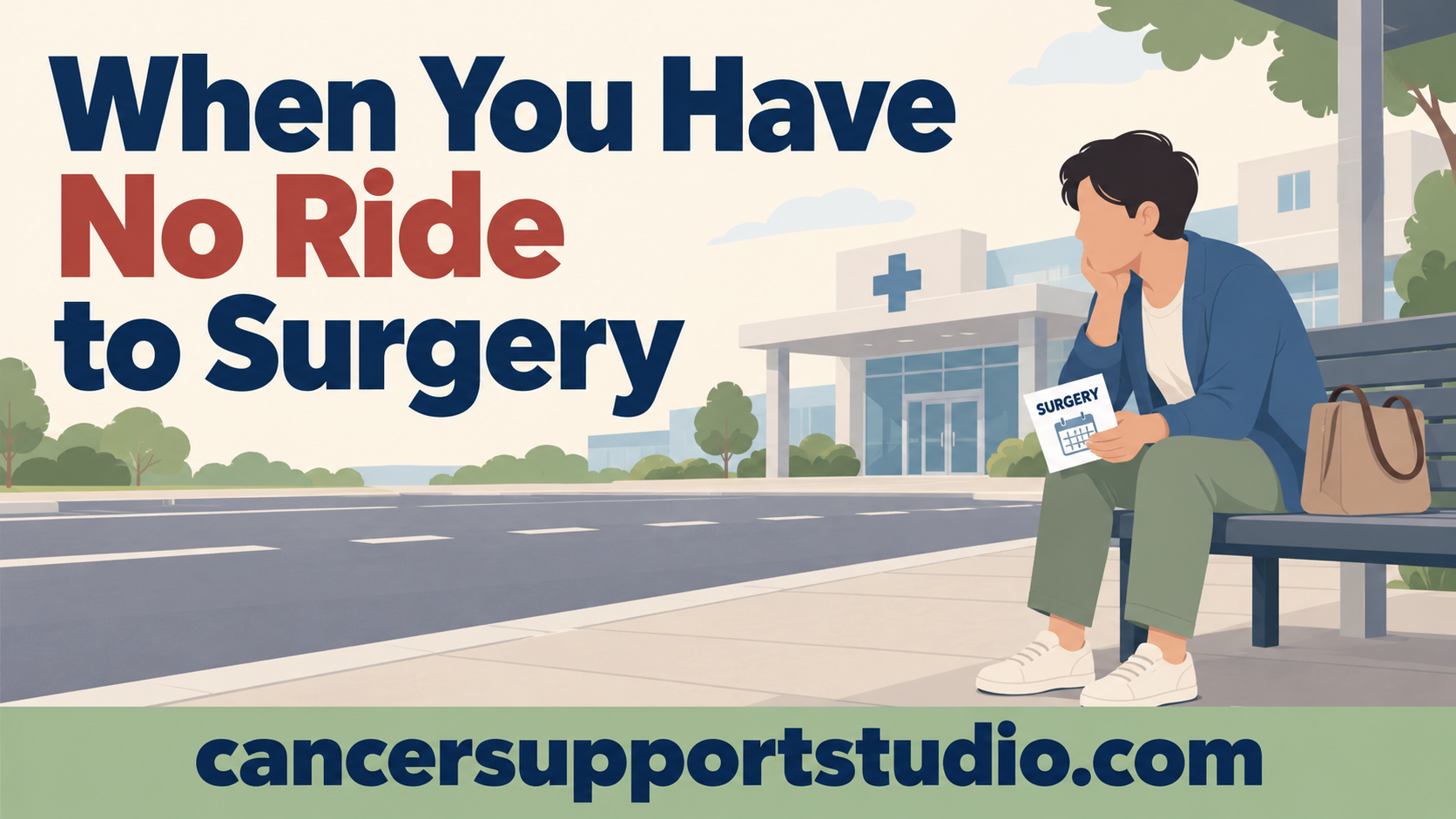
The surgery was on the calendar.
My bag was packed and the only thing missing was a ride. I worked full time, and I thought I had a good support system, but when I asked people to take me to my first cancer removal surgery, the excuses came one after another. I came close to calling the hospital to cancel. At the last minute, one friend said yes. She is disabled and has trouble walking, but she took me anyway. She stayed through the entire surgery and then brought me home. I still think about what it cost her to do that for me. She is the only friend that I still talk to from back home in Michigan.
That was not the last time I faced this.
After moving to Georgia where I didn’t know a soul other than my brother and his family, I thought to join a church and find a cancer support group ASAP. For another major surgery, I had to split the job between two people. Someone from a cancer group took me there, and someone from my church brought me home. Another time, I paid a complete stranger to drive me and stay until I could go home. I even brought my adult son with me once. He is disabled and doesn’t drive, so we took an Uber there and another one back, just so I had a responsible adult by my side, and we didn’t tell them we came by rideshare. Sometimes you have to do what you have to do.
I have postponed surgeries because of this. I have canceled some of the less urgent ones completely, because I don’t have transportation coverage through my insurance. What may be surprising to folks, many of these procedures had nothing to do with cancer. Cancer patients still need colonoscopies and dental surgery, and every one of those needs a driver too.
I always offer rides when I can. But I keep hearing from more and more people in our community who face this same problem.
This Happens More Than People Think
If you have ever skipped an appointment because you had no way to get there, you are far from alone. In 2017, 5.8 million people in the United States delayed medical care because they did not have transportation, according to a national study published in PMC. The number has grown since then. CDC data reported by Planetizen shows between 13 and 14 million U.S. adults faced this problem in 2022, and among people living below the federal poverty line, the rate rose to 16 percent.
For cancer patients, the stakes climb even higher. A study from the American Cancer Society and Roswell Park found that 2.8% of cancer survivors reported transportation barriers, compared with 1.7% of people without a cancer history. Survivors who lacked rides had the highest odds of emergency room use and the highest risk of death from any cause.
Transportation also shows up as the top reason people miss treatment. In a national program led by the American College of Surgeons, transportation barriers were behind 62% of missed radiation appointments. The good news is that giving hospitals and patients structured support cut missed appointments by up to 40%. So people can fix this problem when they work on it together.
Why the Usual Answers Don’t Work
When you say you need a ride, people tend to toss out quick fixes. Most of them fall apart once you look closer.
- The escort rule. If you get sedation, you need a responsible adult to take you home. One patient guide on colonoscopy puts it plainly: if you do not have a ride, the center will likely cancel your procedure.
- Rideshare alone usually isn’t allowed. Endoscopy centers require a responsible adult to go home with you after sedation, so you can’t take a taxi or Uber by yourself. That means paying for a ride still leaves you needing a person.
- Medicaid rides can leave you stranded. In Atlanta, KFF Health News reported families waiting at hospitals for rides that came late or never came at all. The problem hasn’t gone away. In 2026, Nevada Medicaid patients said drivers left them stranded or dropped them at the wrong place, and a Milliman review of state programs links weak oversight to late pickups and no-shows. Get stranded once after surgery, and you won’t trust that system again.
- Cancer ride programs have limits. The American Cancer Society Road To Recovery program is a great service, but you must have a cancer diagnosis and need a ride to a cancer-related appointment. Your hernia repair or dental surgery won’t qualify, even though you are a cancer patient.
- Your people have jobs. Friends and family often can’t take off work unless they know weeks ahead. And some people just don’t want the responsibility, so they say yes and then back out.
What You Can Do When You Need a Ride
Start early. The moment a procedure gets scheduled, start working on your ride. Most programs need days of notice, and some need more. Here are places to look.
- Ask the clinic first. Call the office doing the procedure and ask whether they offer transportation or know a local escort service. Savvy Senior suggests asking the provider doing the procedure whether their clinic offers transportation or can refer you to a local medical escort.
- Call your Area Agency on Aging. Even if you are under 60, ask anyway. Your local Area Agency on Aging is one of your best resources for finding transportation and can refer you to medical escorts in your community. Use the Eldercare Locator or call 1-800-677-1116 to find yours.
- Dial 211. This free line connects you to local help, including volunteer drivers and church ride programs in your county.
- Look for volunteer caregiving programs. These groups bring together volunteers from churches and community groups. Over 650 programs work across the United States, helping older adults and people with disabilities with things like a ride to the doctor.
- Use Road To Recovery for cancer appointments. Call the American Cancer Society at 800-227-2345 and give your zip code so a specialist can check if a volunteer driver program serves your area. The Road To Recovery Rider Guide says you should request a ride at least 25 hours ahead.
- Ask CancerCare about money for travel. CancerCare offers limited financial help for treatment-related transportation. Some of their programs have covered gas, parking, tolls, and taxi, bus or train fare. Call their Hopeline at 800-813-4673.
- Check Mercy Medical Angels for long trips. They provide gas cards and bus or train tickets for non-local care more than 50 miles away, and gas cards are also available for repeat trips to local treatment.
- Hire a medical escort. Home care agencies like VNS Health offer escorts who stay with you and take you home. You pay for these escorts yourself because insurance doesn’t cover them, but you can book one with as little as 24 hours notice. You can also find someone on your own through sites like Care.com or CareLinx.com.
- Ask your care team about your options. For some procedures, sedation choices change the escort rule. In a 2024 study of outpatient colonoscopy, most patients who chose to skip sedation finished their procedure without it, and the researchers named going home without an escort as one of the biggest benefits. Only your doctor can tell you if this is safe for you, but it is worth asking.
- Check your insurance plan. Some Medicare Advantage and private plans include ride benefits. Call the number on the back of your card and ask directly.
If you have someone who can sit with you but can’t drive, ask the clinic if a rideshare with that person counts as your escort. This is what I will be forced to do for an upcoming procedure. Patient guides note that Uber or Lyft can work as long as a responsible adult rides with you.
What Clinics and Care Teams Can Do
Clinics see the cancellations, but they often don’t see the reason behind them. A “no ride, no procedure” policy keeps patients safe, but it also turns a ride problem into a missed diagnosis.
Some teams are testing better ideas. At Fred Hutch, a pilot program has the care team book a rideshare for the patient and act as a staff escort, making sure the patient gets into the car safely and gets dropped off at the right place. The VA in West Los Angeles offered unsedated colonoscopy to veterans without escorts, and the option helped manage last-minute cancellations.
A few simple changes help.
- Ask about rides when you schedule, not the day before.
- Keep a printed list of local ride and escort programs at the front desk.
- Give patients a social worker or navigator contact for transportation help.
What Patient Advocates and Peer Mentors Can Do
If you mentor patients, or you just know someone going through treatment, you can make a big difference here. A handout isn’t enough by itself. One study of cancer patients found that giving information about transportation resources alone did not improve attendance, but helping patients choose the right resource did.
So check in early. When someone tells you about an upcoming procedure, ask, “Do you have your ride home lined up?” People feel embarrassed to admit they don’t. If they say no, help them make the calls.
Volunteer escort programs are growing too. Community Care Corps funds local programs where trained volunteers go with older adults and adults with disabilities to medical appointments and outpatient procedures. This month, the group opened new 2027 funding, with $1.5 million set aside just for volunteer chaperone ride programs. If your area doesn’t have one, that could be a project worth starting.
Nobody Should Have to Choose Between a Ride and Their Health
I think about my friend who could barely walk but still showed up for me. She shouldn’t have had to be my only option, and you shouldn’t have to beg strangers or cancel care because no one can drive you. If you need a ride right now, start with the list above and make one call today. And if you love someone in treatment, offer a ride before they have to ask.
Save this article and share it with someone who has a procedure coming up.