
Cancer Education & Support
Bladder Cancer
Understanding, support, and resources for those affected by Bladder Cancer. Connect with a caring community and access valuable information to help you or your loved one through the journey.
What is Bladder Cancer?
Understanding the Diagnosis
Bladder Cancer is a disease that occurs when abnormal cells in the bladder grow uncontrollably, forming tumors that can spread to other parts of the body if left untreated. It is one of the most common cancers, with symptoms like blood in the urine, frequent urination, and pelvic pain often being early warning signs. While the exact causes vary, risk factors include smoking, exposure to certain chemicals, and chronic bladder inflammation. With early detection and treatment, many people can successfully manage bladder cancer, but ongoing awareness and research are critical to improving outcomes and finding a cure.

Bladder Cancer is measured by Stages, Grades, and if it has invaded the muscle wall.
Stages 0-4

Bladder cancer is categorized into stages based on how deeply it has spread, ranging from Stage 0 (non-invasive, confined to the bladder lining) to Stage IV (advanced cancer that has spread to distant organs). Staging helps determine treatment options, with early-stage cancers often treatable with surgery, while advanced stages may require chemotherapy, immunotherapy, or other aggressive treatments.
Low or High Grades

Bladder cancer is classified into low-grade (slow-growing, less likely to spread) and high-grade (fast-growing, more aggressive) tumors. High-grade cancers are more likely to recur and spread, requiring more intensive treatment and close monitoring.
Invasive or Non-invasive

Non-invasive bladder cancer remains within the inner lining of the bladder, making it easier to treat with procedures like surgery or immunotherapy. Invasive bladder cancer, however, penetrates deeper into the bladder wall or beyond, posing a higher risk of spreading and often requiring more aggressive treatment.

Types of Cancer
Bladder cancer is classified into different types based on the kind of cells affected. The most common type is urothelial carcinoma (transitional cell carcinoma), which starts in the bladder lining and accounts for nearly 90% of cases. Squamous cell carcinoma develops from chronic bladder irritation or infections and is less common but more aggressive. Adenocarcinoma is a rare type that forms in mucus-producing glandular cells of the bladder. Other rare forms include small cell carcinoma and sarcomas, which are highly aggressive and require specialized treatment. Understanding the type of bladder cancer helps determine the best treatment approach.
Risk Factors & Causes
Bladder cancer can develop due to a combination of lifestyle, environmental, and genetic factors. Smoking is the biggest risk, as harmful chemicals from tobacco can accumulate in the bladder. Exposure to certain workplace chemicals (like those in dyes, rubber, or paint) can also increase the risk. Chronic bladder infections, frequent UTIs, or long-term catheter use may contribute to irritation that leads to cancer. Other factors include age (higher risk after 55), family history, and radiation exposure. While not all cases have a clear cause, making healthy lifestyle choices and avoiding known risks can help lower the chances of developing bladder cancer.
Some causes are rare or less common, but they still show up. These include arsenic in drinking water, the diabetes drug pioglitazone, and herbal products that contain aristolochic acid. In parts of Africa and the Middle East, a parasitic infection called schistosomiasis is a known cause. Family history and inherited genetic conditions like Lynch syndrome can raise your risk, and so can a rare birth defect in the bladder. Still, some people get bladder cancer with none of these risk factors, so a diagnosis is never a sign that you did something wrong. If you have questions about your own risk, talk with your doctor.
Treatments and Care at a Glance
When you are newly diagnosed, the list of tests and treatments can feel like a lot. This chart breaks it down in plain words. Your care team builds your plan around your stage, your grade, and your overall health, so you will not need everything on this list. Click any link to learn more.
Tests That Help Find and Understand Your Cancer
- Cystoscopy: Your urologist uses a thin tube with a camera to look inside your bladder.
- Urine tests: A lab checks your urine for cancer cells or other signs of cancer.
- Imaging scans: CT, MRI, or PET scans take pictures inside your body to see if cancer has spread.
- Pathology report: Tissue removed during surgery goes to a lab. The report tells you the type, grade, and stage of your cancer.
- Biomarker testing: The lab checks your tumor for specific changes that help match you to certain medicines.
Watching and Follow-Up
- Surveillance cystoscopy: Your urologist looks inside your bladder on a set schedule to catch cancer that comes back.
- Follow-up scans and urine tests: Repeat tests over time keep an eye on your bladder and the rest of your body.
Surgery
- TURBT: The surgeon removes the tumor through the urethra, so there is no outside cut.
- Partial cystectomy: The surgeon removes only part of your bladder.
- Radical cystectomy: The surgeon removes your whole bladder and nearby lymph nodes.
- Urinary diversion: After the bladder is removed, your surgeon creates a new way for urine to leave your body. This can be a pouch worn outside the body or a new bladder made from part of your intestine.
Treatments Placed Inside the Bladder
- BCG: A weakened germ placed in your bladder through a catheter. It gets your immune system to attack cancer cells.
- Bladder chemo: Chemo medicine placed in your bladder through a catheter to kill leftover cancer cells after surgery.
- Newer bladder treatments: Gene therapy, immune boosters, and small devices that release medicine slowly inside the bladder. These are often used when BCG stops working.
Treatments That Travel Through Your Body
- Chemotherapy: Medicine given through an IV that travels through your whole body. It is often used before surgery or for cancer that has spread.
- Immunotherapy: Medicine that helps your immune system find and fight cancer cells.
- Targeted therapy: Medicine that goes after specific changes inside cancer cells.
Radiation
- Radiation therapy: High-energy beams aimed at the cancer. When paired with chemo, it helps some people keep their bladder. It can also ease pain or bleeding.
Clinical Trials
- Clinical trials: Research studies that test new treatments or new ways to use current ones. They are open to people at every stage.

Support Along the Way
- Ostomy support: Help from ostomy nurses and other patients if you have a urostomy pouch.
- Palliative care: An extra layer of support for symptoms, stress, and side effects. You can get it at any stage, right alongside treatment.
- Second opinion: Another doctor reviews your case so you feel confident about your plan. A bladder cancer specialist is a great choice.
- Questions to ask your doctor: A ready-made list of questions to bring to your next appointment.
Want to See Treatment by Stage?
Your stage shapes which treatments your doctor recommends. These guides walk through each stage in plain language.
When I was first diagnosed in 2018, my pathology report read like a secret code. TURBT, NMIBC, CIS, and BCG were all about me, but I had no idea what they meant. I searched for one plain-word list made for patients and couldn’t find one, so I created this guide. It covers more than 80 abbreviations you will see in your test results, patient portal, and treatment plans. Save it to your phone or print it for your next appointment, and share it with someone who was just diagnosed.
Caregivers can use it too, because you hear these terms just as fast as the patient does. Keep a copy in your bag so you can follow along when the doctor says “we’ll schedule a cysto and check the path.” When you hear a term that isn’t clear, stop and ask your care team what it means for your case. Then write the answer down so you have it later. For more bladder cancer support, visit our growing list of resources.


May 6th is Bladder Cancer Awareness Day
The Bladder Cancer Ribbon
Purple
Strength
Purple honors the strength it takes to live with bladder cancer. It stands for survivorship, dignity, and the warriors who speak up for themselves and each other.
Yellow
Hope
Yellow brings light to the hard days. It stands for optimism and the belief that good news, better treatments, and brighter seasons are still ahead.
Blue
Courage
Blue stands for the quiet bravery of facing cancer. It reflects the choice to show up for scans, treatments, and tough talks, even when you feel scared.
National Cancer Institute
Statistics
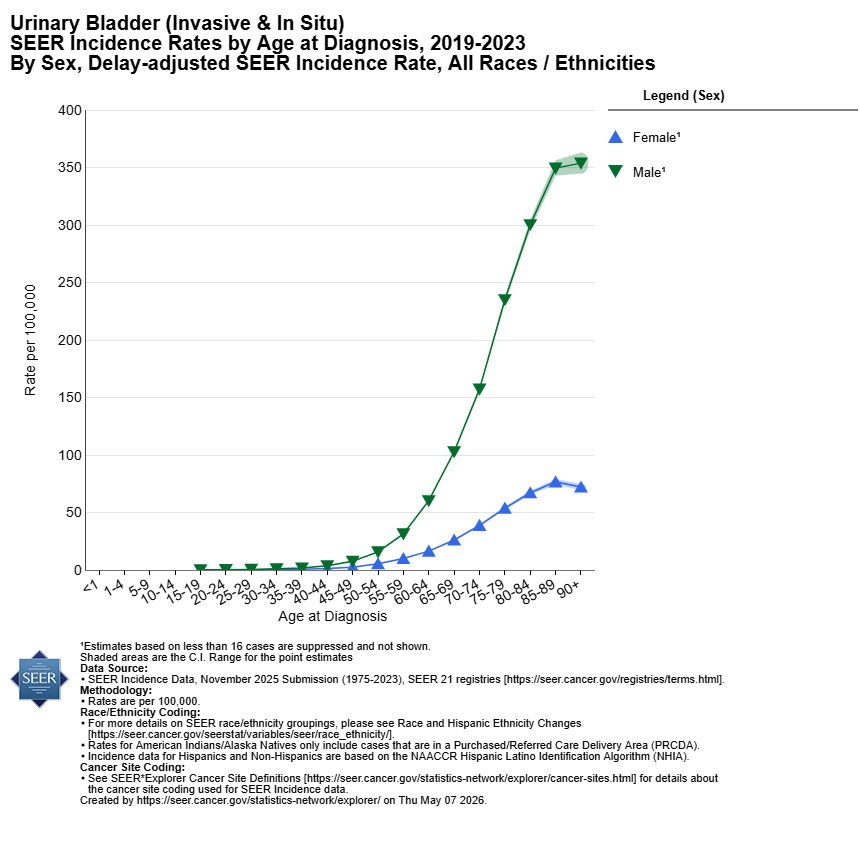
Interesting statistics on the huge gap between Male vs Female diagnosis! As you can see, Bladder Cancer can affect anyone at any age from teens to over 90 years old!
This guide is for learning only and does not replace medical advice. Talk with your care team about which options fit your diagnosis. For more support, visit our growing list of cancer support resources at cancersupportstudio.com/resources.
Bladder Cancer Community
Support and Resources
Looking for support, connection, or helpful resources? Explore these trusted community groups, support networks, and valuable resources to help you or a loved one navigate the bladder cancer journey.
- Facebook Support Groups – https://www.facebook.com/search/groups/?q=bladder%20cancer
- Reddit Threads: https://www.reddit.com/r/BladderCancer/