
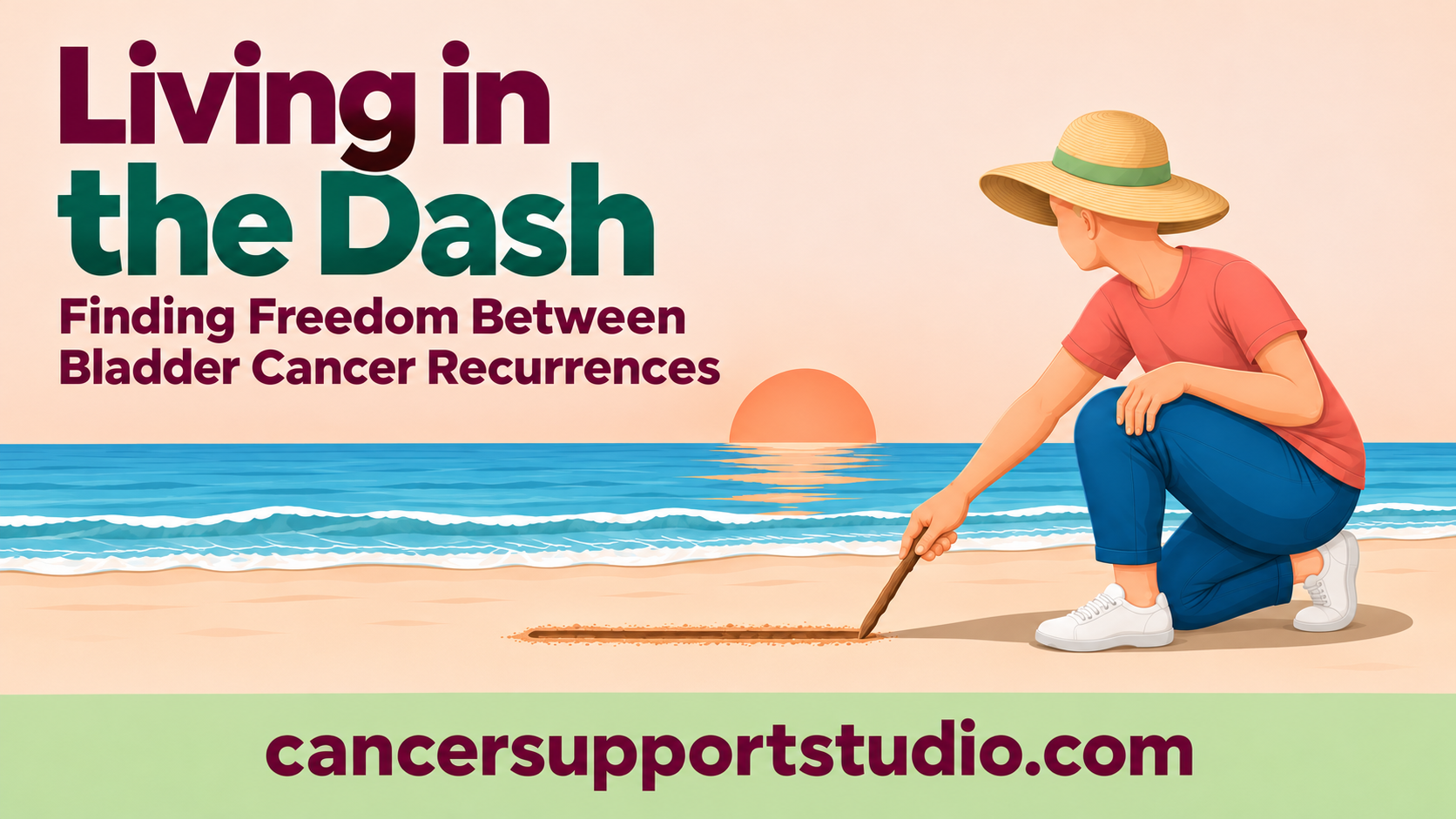
Finding Freedom Between Bladder Cancer Recurrences
There is a moment after a clear cystoscopy that I never get tired of. I get dressed, walk out to my car, and sit there for a minute before I start the engine. My next scope is 6 months away. I don’t know when the next growth will show up, but I know the time in front of me is mine. I call that stretch of time “living in the dash.“
I’ve had 10 recurrences of non-muscle invasive bladder cancer since 2018. So I’ve spent a lot of time in that in-between space. Over the years, I stopped waiting for “someday” and started using the time I have. That shift gave me a kind of freedom I never had before cancer.
Where “the Dash” Comes From
The idea goes back to a poem called “The Dash,” written by Linda Ellis in 1996. That same year, an announcer read it on a syndicated radio program, and it spread fast. You’ve probably heard it read at a funeral.
The poem focuses on the small dash on a headstone between the year someone was born and the year they died. Its message is simple. The dates are the bookends, and the dash stands for how you spent your life.
My Dash Looks a Little Different
Most people think of life as one long dash. With recurring bladder cancer, I live in a lot of little ones. Each one starts after treatment and runs until the next growth.
Recurrence comes with this territory. Mayo Clinic notes that bladder cancer is one of the cancer types most likely to come back. The American Cancer Society says people who keep their bladder usually get a cystoscopy about every 3 months for the first couple of years. So your life starts to run on a calendar of scopes and results.
Because of that, I learned to plan in chunks of time. After a clear scope, I look at the next few months and ask myself what I want to fill them with. Then I go do it.
The Hard Part Comes First
I won’t pretend the waiting is easy. The week before a cystoscopy, my brain gets loud. Every twinge feels like a sign and I start to look in the toilet before I flush.
That feeling has a name called scanxiety, but I call it “scopexiety“. You are far from alone with it. The American Cancer Society points to one study where scanxiety affected more than 70% of people with cancer, and survivors say waiting for results is the hardest part. MD Anderson shares 6 ways to cope with scanxiety before your next appointment.
If the fear starts running your days, please talk with your doctor or a mental health professional. And if you ever feel like you’re in crisis, you can call or text 988 any time.
What Research Says About the Shift After Cancer
Researchers have a name for the change in perspective so many of us feel after a diagnosis. Researchers call this post-traumatic growth, and Cancerworld Magazine explains how facing your own mortality can spark a renewed commitment to life. Patients in the article talk about small joys and restored relationships, which sounds a lot like my own dash.
One detail stood out to me as a recurring cancer patient. A UNC Health social worker described a mental shift from curing the cancer to figuring out what it looks like to live with it. That made sense to me right away. I don’t get one big wake-up call, but instead I get a reminder every few months.
Letting the Little Things Go
Before cancer, I used to stew for days over a rude email or a messy kitchen. Now I ask myself one question. Will I care about this at my next scope?
If the answer is no, I let it go. That one question has saved me a lot of stress and energy. It also cleared space for the things I want my dash to hold.
That’s where the freedom comes in. When you stop carrying stuff that doesn’t deserve your time, you have room for joy. And joy gets to be a priority, not a reward you earn after everything else is done.
This Goes for Relationships, Too
The same question works on people. Yes, you get cancer ghosted. Some friends and family pull away after a diagnosis, and it happens so often that cancer ghosting has its own name. I’ve had my share of it, but I’ve also done some of the letting go myself.
These days, I’m picky about who gets a close spot in my life, my inner circle. I ended the relationships that caused me major stress, because my health and my peace can’t afford them. Some even ended over one difference of opinion, because it was about something I care deeply about. I used to feel guilty about that. Now I don’t, and neither should you. Getting out and meeting new friends should be fun and exciting, but pay closer attention to who you want in your inner circle. More importantly, pay the most attention on who wants YOU in THEIR inner circle and why.
Letting someone go doesn’t mean I treat them badly. I don’t have to be close friends with someone to be polite. They just get moved to acquaintance status. I still smile and say hello, but they don’t get my limited time and energy. This includes family.
If you are struggling with toxic and abusive family (biological or otherwise), I give you permission here and now to re-evaluate going limited or no-contact without any guilt over it. That may be another article later.
How I Spend My Dash Now
Here’s what fills my in-between time these days in order (yours may look different):
- Time with loved ones. I say yes to dinners and long phone calls with the people I love. I’m also a caregiver for my adult son, so I hold on to our time together.
- Advocacy. Serving others gives my dash purpose. Mentoring other patients through organizations like BCAN’s Survivor 2 Survivor program, and building resources helps me turn my hard days into help for someone else. And I get to be the person I needed when I was diagnosed.
- Concerts. I keep a running concert bucket list, well over 130 over my life-span. Even if I have to go solo and/travel, I buy the ticket and make the plan.
- Creative work. Art and design projects quiet the noise in my head. Making something creative reminds me I’m more than a patient. You can find some of my creative efforts in my Merch Shop.
- Travel. My Alinker walking bike, Gulliver, made my first trip abroad possible in 2024. Now I plan trips around my scope calendar instead of waiting for the perfect time.
Ways You Can Start Living in the Dash
You don’t need a huge plan to start. Try these small steps after your next clear result or the end of a treatment round:
- Plan in seasons. Pick one or two things you want to do before your next appointment, and put them on the calendar.
- Use the “next scope” test. When something small upsets you, ask if you’ll care about it at your next appointment.
- Say it now. Tell people you love them, and don’t save it for a card. Get used to saying “Love ya“.
- Protect your energy. You can say no to people and plans that drain you. But don’t forget to say yes to something you always wanted to do or try!
- Get organized. When your appointments and notes live in one place, your brain has more room for fun. Keep it together with the help of my Cancer Care Book.
I Wish We Learned This Sooner
Most people don’t learn this until something big knocks them down. A diagnosis, a loss, or a scary phone call usually forces the lesson. I wish we learned it as kids instead. Some people figure it out early, and I admire them. But if cancer is what taught you, you still get to use the lesson. Your time between treatments belongs to you, and you can fill it with people and moments you love.
So here’s my hope for you. Whether your next appointment is three months away or three years away, I want you to live in your dash. Start living in the dash today.
If you need help finding support along the way, start with my growing list of Cancer Support Resources at FindCancerHelp.com. You can follow @blessyourvibes on all my socials for more encouragement. And if someone you love is living between treatments, send this their way.
We got this, friends! <3