There is something powerful about hearing a cancer bell ring. It symbolizes not just victory but closure.
For many people, that sound means, “I made it.” It marks the end of chemotherapy, radiation, or another grueling chapter of treatment. It is a moment where the patient, their loved ones, and the medical team can pause and say, “Look what you survived.” For some, ringing the bell brings tears, relief, pride, and a deep breath they may have been holding for months. MD Anderson shares that the bell-ringing tradition began there in 1996 and has since become a familiar milestone in many cancer centers.
That moment matters because cancer takes so much more than time in exam rooms. It takes sleep, peace, confidence, routines, and sometimes the feeling that your body is still your own. A bell can give a patient one clear moment of celebration in a season that often feels like fear, waiting, pain, and more waiting. It says, “This part is over.” And for mental health, that can be huge.
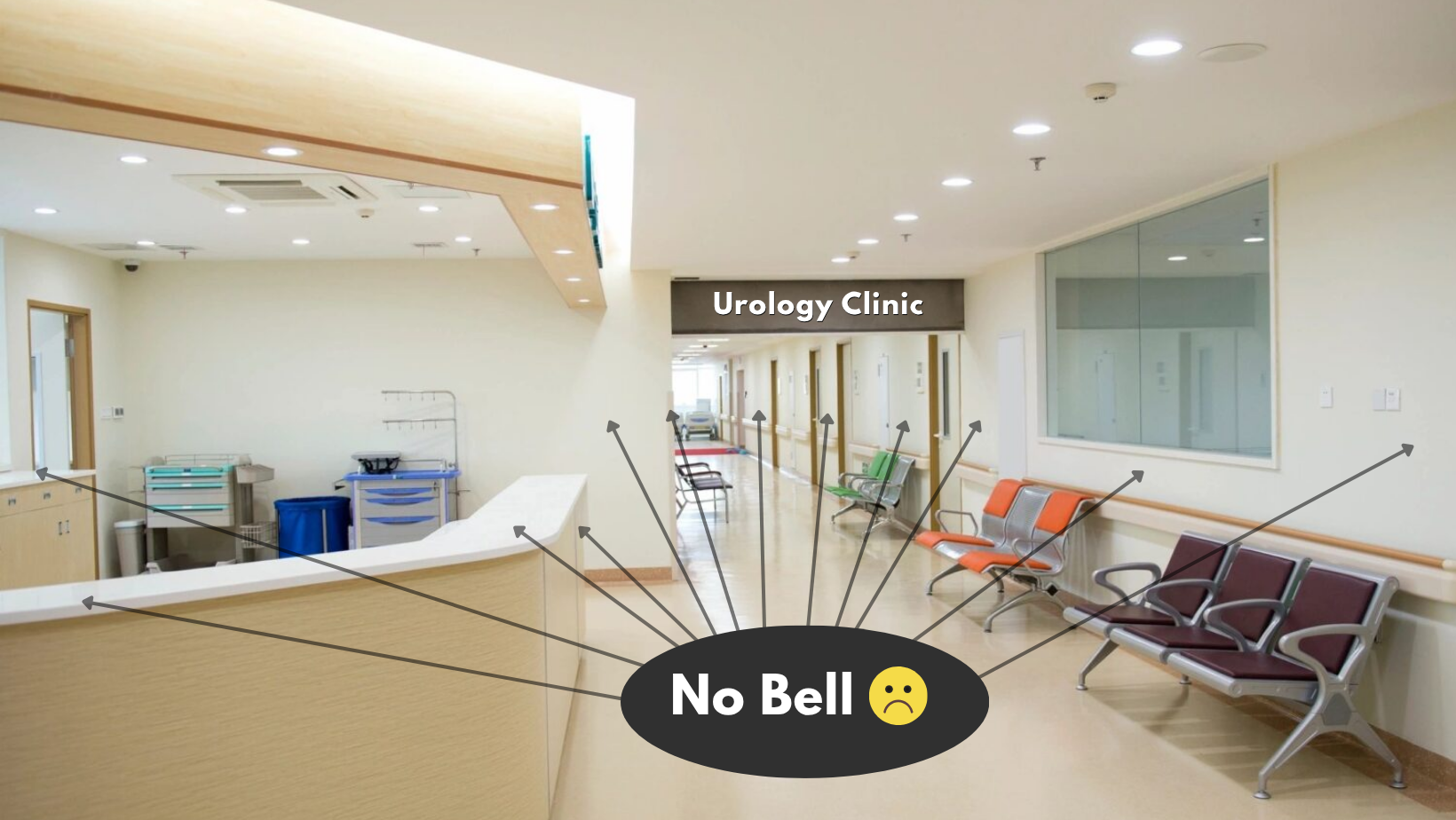
Here is the part many bladder cancer patients understand all too well. Not everyone gets that bell moment. It isn’t offered, thought about, or even celebrated. There is this emptiness and awkwardness when you leave your last treatment or scope, with the thoughts of “will this come back”?
The Bladder cancer journey can come in cycles. There is also a big emotional difference between non-muscle invasive bladder cancer and muscle-invasive bladder cancer, even though both can be frightening and exhausting.
Non-muscle invasive bladder cancer usually means many patients keep their bladder, but they may face years of cystoscopies, TURBT procedures, intravesical treatments like BCG or chemotherapy, and the constant worry that another spot will appear. The goal shifts from beating this disease, to sparing your bladder as any cost.
Muscle-invasive bladder cancer means the cancer has grown into the muscle layer of the bladder, which can bring a completely different level of fear because treatment may involve chemotherapy, radiation, or a radical cystectomy to remove the bladder. But even then, surgery is not always the clean ending people imagine. Having a radical cystectomy does not guarantee that bladder cancer can never return or spread. Recurrence can still happen in nearby tissues, lymph nodes, the upper urinary tract, or as metastatic disease in other parts of the body, which is why ongoing follow-up remains so important. Research on recurrence after radical cystectomy also shows that relapse can occur locally or at distant sites, with many recurrences happening within the first two years after surgery.
This is one reason bladder cancer patients can feel like they are living between two worlds: grateful for treatment, but still never fully free from the question, “What happens next?” That is not exactly the kind of journey that fits neatly into a “last treatment day” celebration. Fear of recurrence is one of the hardest parts of living with bladder cancer, especially because bladder cancer has a high risk of coming back. So where is the bell for that?
Many bladder cancer patients are treated in urology clinics, not always in large infusion centers or radiation departments where bells are more common. Urology clinics are often set up for procedures, scopes, surveillance, urine tests, and follow-up visits. Their rhythm is clinical and practical. The standard of care focuses on monitoring, catching recurrence early, and deciding the next medical step. A bell is not part of medical guidelines, and honestly, that leaves the patient empty and unsupported. Because emotionally, bladder cancer patients are still fighting, still showing up, still climbing back onto the exam table, still holding their breath when the doctor looks at the screen, still dealing with the awkward, uncomfortable, deeply personal parts of this disease. Patients are still trying to live a normal life while managing a disease that never ends.
It can be very taxing on a patient’s mental health. When someone does not “look sick,” does not lose their hair, or does not go through the type of treatment people usually imagine with cancer, they may feel like their experience is not serious enough to count. That can create a painful kind of imposter syndrome. Some patients may even catch themselves thinking they would rather go through one intense, obvious battle if it meant they could finally be finished forever. Of course, no cancer experience is easy, but those complicated feelings are real, and they deserve compassion rather than guilt.
This is not only true for bladder cancer. Many people with advanced, metastatic, blood-related, or chronic cancers may never have a clean finish line either. Some cancers are managed more like chronic illnesses, with treatment continuing for a long time to control the disease and symptoms. The American Cancer Society explains that some advanced or metastatic cancers can be managed as chronic illnesses with long-term treatment. People with cancers like chronic lymphocytic leukemia, multiple myeloma, metastatic breast cancer, ovarian cancer, prostate cancer, and others may live in a world of ongoing treatment, monitoring, maintenance therapy, or “stable for now.” And “stable for now” is a victory. It just does not always come with applause.
That is why we need to reframe what victory looks like. Not take away from the big single bell moment, but add to it.
Maybe the victory is not the end of cancer. It could be getting through today’s cystoscopy. It’s hearing “no visible tumor” after a scan. It comes with finishing a round of BCG. Maybe it is learning how to live with a urostomy bag and still going out to dinner. It could be advocating for yourself and asking for a second opinion. Or it could be finally saying out loud, “I am scared,” instead of pretending to be fine.
Small victories deserve to be honored too. Some patients create their own rituals. They go out for a celebration after every clear cystoscopy. Taking a photo or video in the car after hard appointments or buying flowers after finishing treatment is a way to cope or celebrate. One could light a candle on diagnosis anniversaries or write one sentence in a journal: “I did the hard thing today.” Some make playlists called “Still Fighting.” Planning something joyful after scan day, even if it is just pajamas, takeout, and refusing to answer the phone for a few hours, helps to keep their struggle more tolerable.
Cancer patients should not have to wait for a perfect ending to honor their courage. In fact, waiting for a perfect ending can be painful when your cancer story is complicated. Oncology Nursing Society has also called for expanding the meaning of the cancer bell so it can include patients whose journeys involve lifelong therapy, chronic cancer, palliative care, stable scans, or other meaningful milestones.
Most of all, patient experience matters. Medical facts are important, but so are the lived realities of scanxiety, bathroom changes, intimacy struggles, financial stress, body image issues, fatigue, fear of recurrence, and the quiet moments nobody sees.
Bladder cancer patients need education, support, and a community that understands the long road. They need doctors who listen, loved ones who do not rush their feelings, and reminders that every step forward is worth honoring. You are still here, you are still fighting, you are not alone and you still matter!
You got this friends!