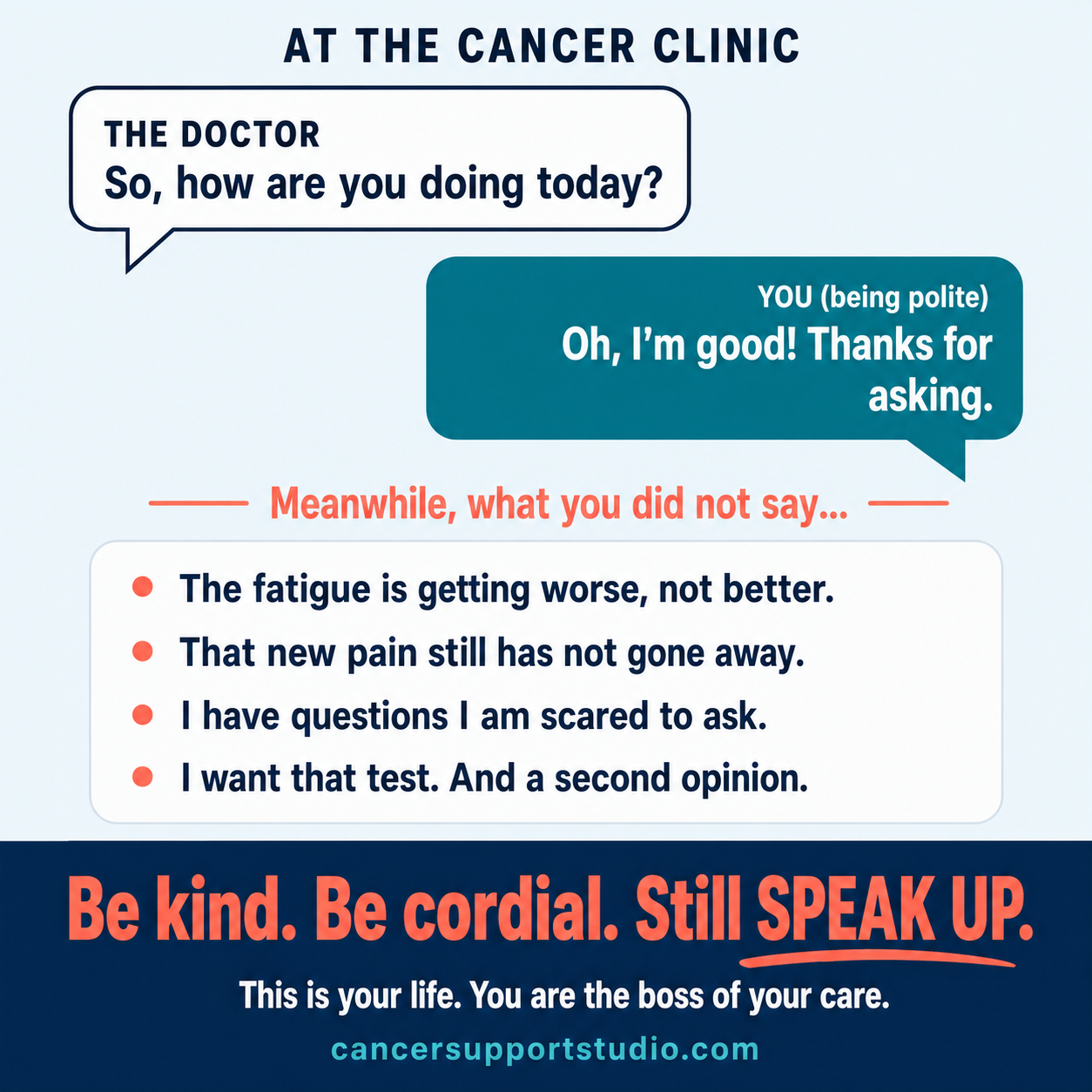
Politeness is not the problem. The automatic answer is.
When a provider asks, “How are you doing?” many patients respond as though they passed a neighbor in the grocery store.
“I’m good.”
“I’m doing fine.”
“Not too bad.”
The provider might record the patient as stable and move forward. Meanwhile, the patient is exhausted, in pain, struggling with new symptoms, or worried something has changed. A social pleasantry has now entered the medical record as a health update. Human communication remains a deeply flawed system.
The difference between being assertive and being aggressive.
Patients do not need to enter the room ready for battle. They need to be direct, prepared, and honest. A stronger response sounds like:
“Thank you for asking. I’m concerned because I’ve had increasing pelvic pain for three weeks. It happens daily, reaches a six out of ten, and interferes with sleep.”
That gives the provider useful clinical information instead of a polite dead end.
Describe the impact, not only the symptom.
Providers need to know:
- When it started
- How often it happens
- Whether it is worsening
- What triggers or relieves it
- How it affects sleep, eating, mobility, work, or daily activities
- What changed from the patient’s normal baseline
“I’m tired” gives little information.
“I now need to lie down after showering, and I have stopped cooking because standing leaves me exhausted and in sever pain” shows the seriousness.
Patients need to set the agenda immediately.
Appointments move quickly. Patients should open with their main priorities:
“I have three concerns I need us to address today. The new pain is the most urgent.”
AHRQ encourages patients to prepare an agenda, speak up, ask questions, and participate in decisions about their care. Shared decision-making means the provider brings medical knowledge while the patient brings their symptoms, goals, history, and lived experience.
Some questions patients should ask when a concern is dismissed.
- What do you think is causing this?
- What other conditions are you considering?
- What makes you believe testing is unnecessary?
- What are the risks of waiting?
- What symptoms would change your decision?
- When should I return if this continues?
- Would a referral to a specialist be appropriate?
- Please include my concern and our discussion in today’s visit notes.
Patients should review their visit notes and test results.
Patients should check whether the record accurately reflects what they reported. Access to clinical notes helps patients identify errors, follow the plan, and participate more fully in their care. You deserve a clear explanation when a provider does not recommend a test, referral, or treatment you requested. Don’t be afraid to ask them to change any incorrect information. Clerical errors happen and once something is in your record, it is in there forever. A mistake or misinterpretation can follow you the rest of your life if unnoticed.
Bring an advocate.
A trusted person might take notes, remember questions, notice missing information, or speak when the patient feels overwhelmed. This matters during cancer appointments, where fear and information overload often arrive together, because apparently cancer was not burdensome enough on its own. If you do not have someone to join you in person, call them and have them on speaker phone. Or ask the doctor if you can record the visit so you don’t forget any details. You can have a friend or loved one listen to it later.
If a provider states they do not want their visit with you recorded, you shouldn’t do it any way. However, that is a big red flag if you do not trust them and you may consider getting a second opinion if you feel the need.
Get organized.
Keeping track of symptoms, appointments, medications, test results, and questions gets overwhelming fast. The Cancer Care Book helps you organize it all in one place, so you arrive prepared and leave with clearer answers. Visit cancercarebook.com.
