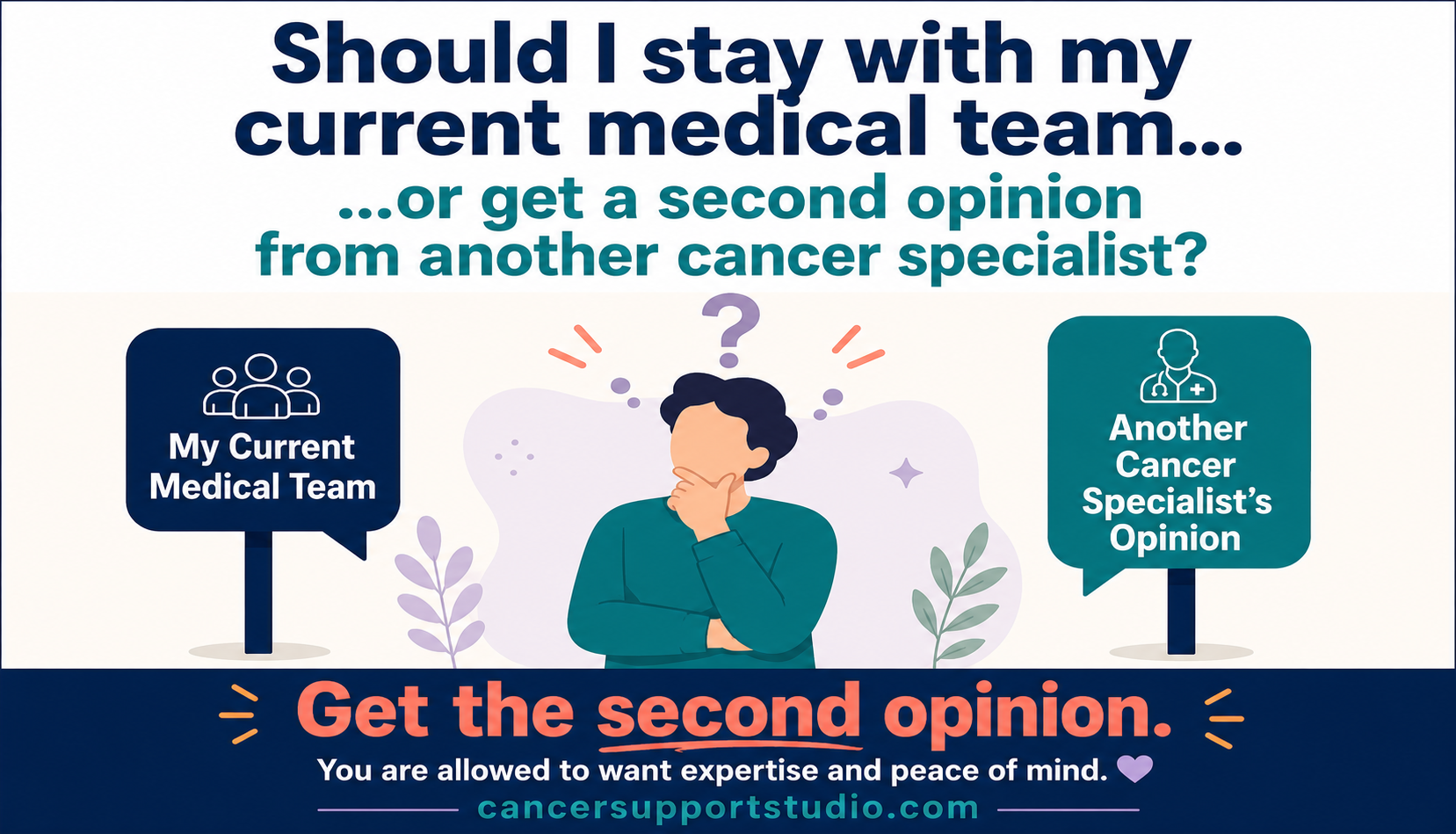
A second opinion is ok and encouraged.
A second opinion does not always mean the first doctor failed. It might confirm the diagnosis, question it, provide more information, or identify other treatment choices. The National Cancer Institute specifically recognizes those benefits and encourages patients to gather their records, pathology, imaging, and test results for review. You are an equal participant in your care.
When you are facing cancer, you need confidence in your diagnosis, treatment plan, and medical team. When something feels unclear, rushed, dismissive, or incomplete, another medical opinion is a reasonable next step.
A second opinion is not rude or disloyal. It does not mean you believe your doctor is incompetent. It means the decisions in front of you are serious, and you want enough information to make them with confidence.
You Do Not Need Permission
Many patients hesitate because they like their doctor or worry about damaging the relationship. But your provider’s feelings should not determine what happens to your body.
You might respect your primary care physician and still want guidance from an oncologist. You might trust your oncologist and still request a pathology review from a major cancer center. Seeking another opinion does not mean you must leave your current provider.
Another specialist might confirm the diagnosis and treatment plan. They might also suggest more testing, a different treatment, a less invasive option, or a clinical trial. Either outcome gives you more information.
You Are Allowed to Seek More Than Two Opinions
The phrase “second opinion” makes it sound as though you receive one more consultation and then must stop. You do not.
You have the right to seek a third, fourth, or additional opinion when important questions remain. Consider another consultation when:
- You do not fully understand the diagnosis or stage.
- The proposed treatment does not feel right.
- Your doctors recommend different approaches.
- Your symptoms or concerns are being dismissed.
- You feel pressured to decide quickly.
- Your provider has limited experience with your cancer type.
- You want to explore other treatments or clinical trials.
- You continue to feel something has been overlooked.
Insurance, appointment availability, and treatment urgency might limit your options. Ask how long you have to make a treatment decision before delaying care for more consultations.
Another Opinion Might Confirm the Plan
A second specialist might agree with your current doctor. That agreement still matters.
Confirmation gives you more confidence when choosing surgery, chemotherapy, immunotherapy, radiation, surveillance, or another major treatment. Peace of mind has value, especially when the decision affects your health for years.
Another Opinion Might Change the Plan
Cancer specialists often bring different training and experience. A surgeon, medical oncologist, radiation oncologist, or cancer-specific specialist might view the same case differently. A consultation with a specialist might lead to:
- Additional testing
- A pathology review
- A different treatment or schedule
- Active surveillance
- A less invasive procedure
- A more aggressive approach
- A clinical trial
- Review by a multidisciplinary cancer team
No one should rush you into life-changing treatment without explaining the diagnosis, available options, risks, expected benefits, and what might happen if you wait. If you have the second opinion, you are allowed to seek more opinions until you are confident and comfortable with your case and treatment.
Bring the Right Records
A meaningful second opinion requires more than a short conversation. The specialist needs enough information to review your case. Bring or send these important records:
- Pathology and operative reports
- Imaging reports and image files
- Laboratory and treatment records
- Medication lists
- Relevant medical history
- Notes from your current specialists
Ask whether the new specialist wants the original pathology slides or tissue samples. A pathology review means another pathologist examines the specimen, not merely the written report. You may need to repeat testing or imaging, but sometimes it is worth it to get a fresh view.
Ask Direct Questions
Tell the specialist why you requested the appointment. You might say: “I want to confirm my diagnosis and understand every reasonable treatment option before I decide.”
Then ask these questions (if applicable):
- Do you agree with the diagnosis and stage?
- Should my pathology be reviewed again?
- Do I need more testing?
- What treatment do you recommend, and why?
- What other options should I consider?
- What are the risks of each option?
- What happens if I wait?
- How often do you treat this type of cancer?
- Are any clinical trials relevant to me?
Write down the answers or bring someone who will take notes. Cancer appointments deliver a remarkable amount of information when your brain has chosen the least convenient time to stop cooperating. Be prepared ahead of time because you have limited time with providers.
Pay Attention to How You Are Treated
A provider’s medical knowledge matters. So does the way they communicate with you.
Notice whether the specialist listens, reviews your records, explains their reasoning, discusses alternatives, and respects your priorities. You should feel safe asking questions and reporting changes.
A bad feeling does not always mean the medical advice is wrong. It does mean you should pause and identify what is bothering you. Unanswered questions, conflicting information, pressure, and dismissal all deserve attention. Your instincts are not a diagnosis. They are a warning worth taking seriously.
When Doctors Disagree
Different recommendations do not always mean one doctor is wrong. Some cancer decisions involve several reasonable options.
Ask each provider why they recommend their approach, what evidence supports it, and what risks they see in the alternatives. A third opinion often helps when the first two specialists disagree.
Choose the plan supported by relevant experience, clear reasoning, and respect for your goals. The most confident voice in the room is not automatically the most qualified one.
Do Not Let Fear Decide Your Care
A professional provider should not shame or punish you for seeking another opinion. You are the person who will live with the diagnosis, treatment effects, and long-term consequences. A second opinion is not a betrayal. A third opinion is not excessive when serious questions remain. Changing doctors is not failure. Seeking specialized care is not being difficult.
This is cancer. This is your body. This is your life. Get the opinions you need to feel heard, informed, and confident in your care.
Keeping pathology reports, treatment records, symptoms, medications, questions, and appointment notes organized gets overwhelming fast. The Cancer Care Book keeps your information together, so you arrive prepared for every consultation.
